Short answer: TDS return filing for tax year 2026-27 uses new forms: 138 for salary (it was 24Q), 140 for other payments to residents (26Q), 144 for non-residents (27Q) and 143 for TCS (27EQ). Fill Protean's RPU 1.2, validate it against the CSI file to make the FVU file, then upload it on the e-filing portal and e-verify. The October to December return is due 31 January 2027.
A quarterly TDS return is mostly a matching job. Every deductee row has to sit under a challan the bank has reported, with the right PAN, date and amount, and the challan totals have to agree to the rupee. The new form numbers and a new version of the utility add a few more ways to get it wrong this year.
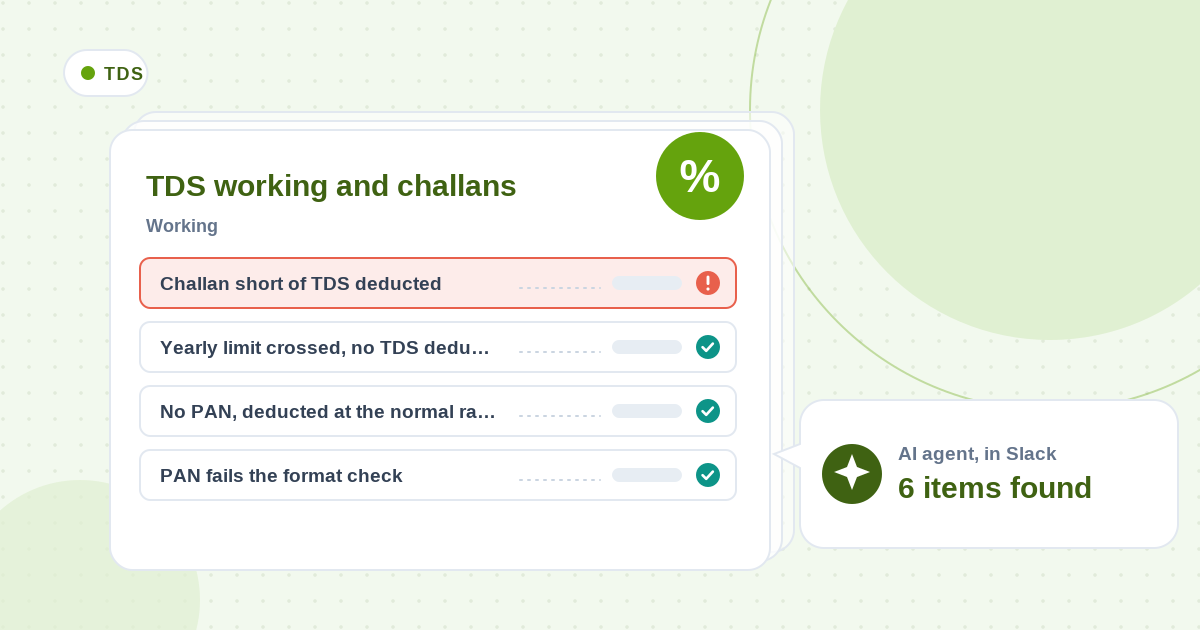
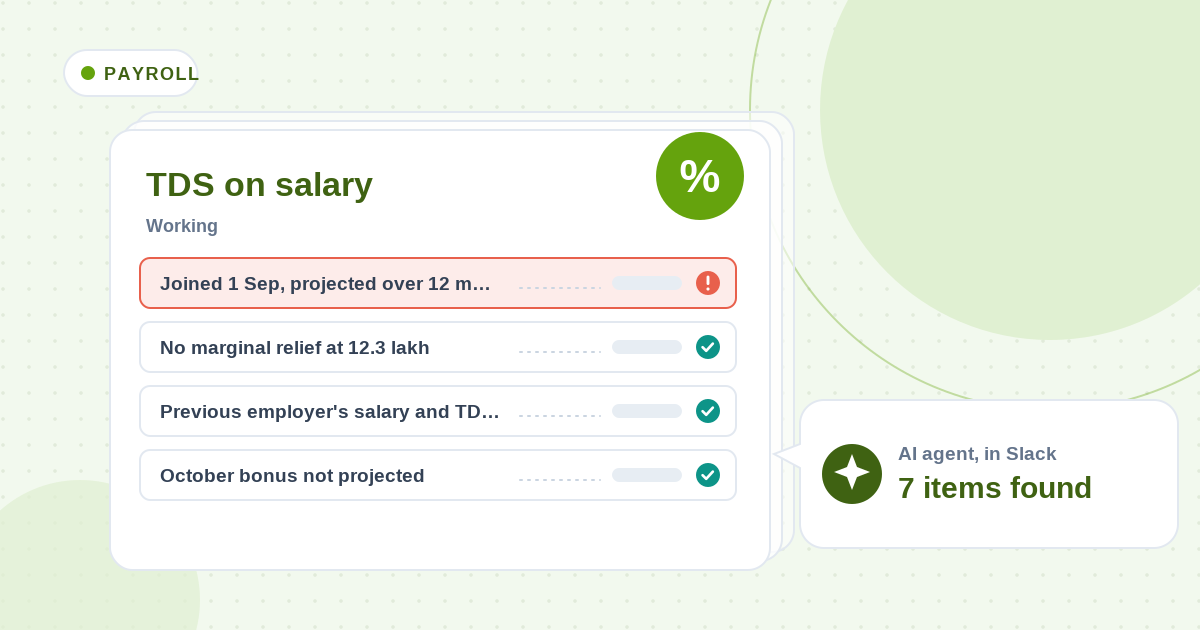
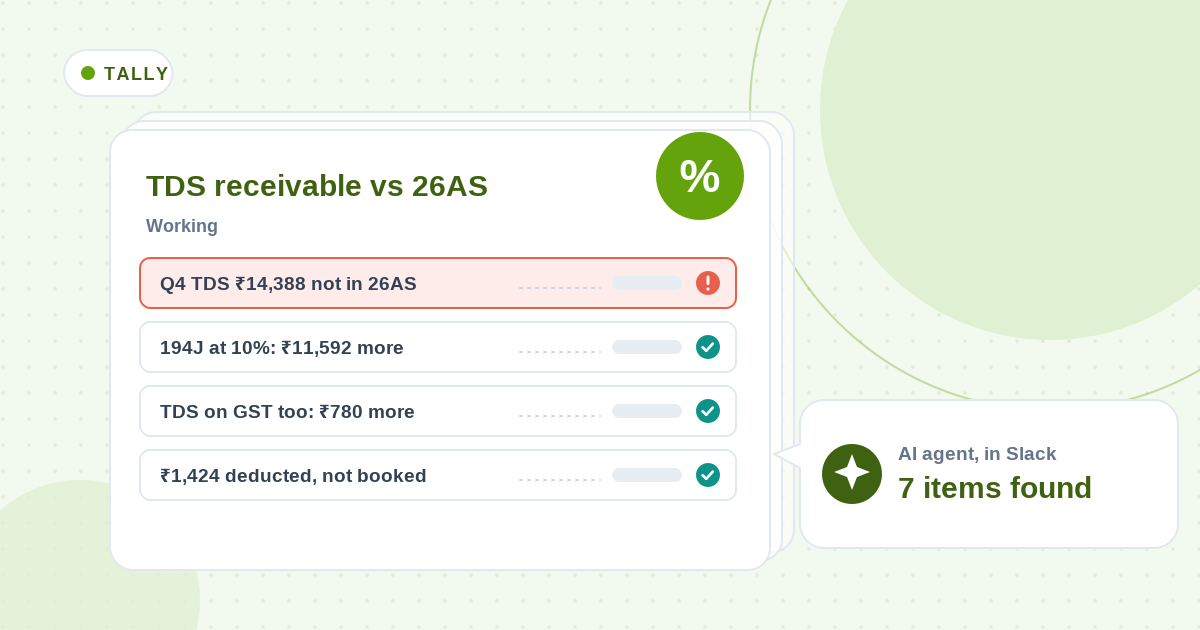
This post follows a recent tutorial that files a Form 140 with RPU 1.2, notes the online route on TRACES, and lists the due dates. The monthly working behind the return is in TDS working and challan reconciliation. Then it explains how an AI agent would prepare and check the same return, and what stays with you.
The tutorial this is based on
How to File TDS Return Offline Using RPU | New Process 2026 | Step-by-Step Guide by Accounting & GST Solution, published 29 October 2026 (in Hindi). He fills a real Q2 Form 140 in RPU 1.2, makes the FVU file with the CSI file and uploads it on the e-filing portal, as the official Form 140 user manual describes. CA Devesh Thakur's No RPU Needed (9 October 2026, in Hindi) shows filing online on TRACES instead; we found no official notice of that route, so we treat RPU as the documented method. We left out the payment codes he takes from a rate chart, which we couldn't confirm on an official page.
How does TDS return filing work with RPU and FVU?
- Download RPU 1.2 from Protean's e-TDS downloads page and check that Java is installed. RPU 1.2 and FVU 1.2 are for tax year 2026-27 onwards; returns for FY 2025-26 and earlier still use RPU 6.0 and FVU 9.5.
- Open the utility and pick the form (Form 140 for resident non-salary payments, Form 138 for salary) and Regular. On the Form sheet, enter the TAN, PAN, tax year 2026-27, the quarter and the deductor type, then the deductor's and responsible person's details, copied from the TAN profile on the e-filing portal.
- On the Challan sheet, enter each challan from the e-Pay Tax payment history: tax, interest and fee, BSR code, date, challan serial number and minor head 200. Put any interest in the interest allocation column.
- In Annexure I, add the deductees under each challan: PAN, name, payment code, the date paid or credited, the amount (the taxable value, not the invoice total), the TDS, the rate and the date of deduction.
- Download the CSI file from e-Pay Tax, Income Tax Act 2025, Challan Status Inquiry, filtered to the quarter's dates. Check that every challan in the return is in it.
- Choose Create File, pick the CSI file and a folder for the error report, and validate. With no errors, the FVU file is created. Otherwise fix the rows the error report names and validate again.
- Zip the FVU file. Log in to the e-filing portal with the TAN and go to e-File, Income Tax Forms, File Income Tax Forms, Forms as per Income Tax Act 2025, Deduction and Collection at Source. Pick the form, tax year, quarter and Regular, attach the zip, and e-verify with Aadhaar OTP or a DSC.
- Check the status under View Filed Forms. An accepted return goes to TRACES for processing, and Form 131 (it was 16A) is downloaded from TRACES after that.
- Recent videos, including CA Devesh Thakur's, show a second route on TRACES: start the form online, import unconsumed challans, add deductees one by one or with a bulk template, map them to challans until the difference is zero, then validate and e-verify. Check it is available to you before relying on it.
TDS return forms and due dates for tax year 2026-27
| Form (old name) | What it covers | Q3 (October to December 2026) due |
|---|---|---|
| Form 138 (24Q) | TDS on salary | 31 January 2027 |
| Form 140 (26Q) | TDS on other payments to residents | 31 January 2027 |
| Form 144 (27Q) | TDS on payments to non-residents | 31 January 2027 |
| Form 143 (27EQ) | TCS | 31 January 2027 |
| Form 131 (16A) | Non-salary TDS certificate for the quarter | 15 February 2027 |
| Form 141 (26QB, 26QC, 26QD, 26QE) | Challan-cum-statement for rent, property, contractor and VDA deductions under section 393(1). Not a quarterly return. | 30 days from the end of the month of deduction |
Where it usually goes wrong
- Using RPU 6.0 for a 2026-27 return, or RPU 1.2 for FY 2025-26. The portal rejects an FVU version mismatch.
- A challan entered with the wrong BSR code, date or serial number, so it doesn't match the CSI file.
- The invoice total, with GST, entered as the amount paid instead of the taxable value.
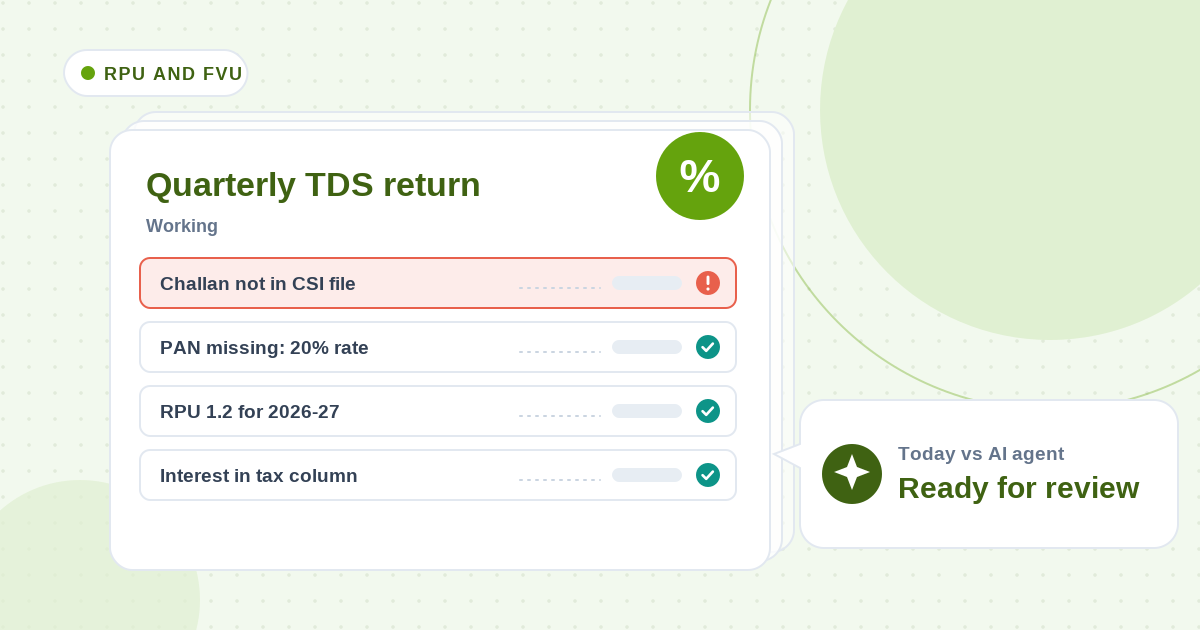
- Interest paid with the challan but left in the tax column, which shows as a short payment when TRACES processes the return.
- A wrong or missing PAN. The deductee doesn't get the credit, and without a PAN the rate is at least 20% (section 397(2)(b)).
- Filing a correction as a regular return, or with the wrong token of the original. The portal rejects an RRR mismatch.
- Filing late. Section 427 charges ₹200 a day, paid before the return is delivered. See interest on late payment of TDS.
How an AI agent does it
Each person on the team gets their own AI agent, used from Slack, WhatsApp or a web app. It has its own files, spreadsheets and a real web browser: it reads the Excel, CSV, PDF and Tally exports you give it and writes its working in Excel. On a portal you sign in yourself, in its browser window, with your own password and OTP. It asks before it changes, sends, files or pays anything, and every step is logged. This section describes how it would prepare and check a quarterly return. It can be wrong, so the last sections say what you still check.
What you give it
- The quarter's TDS working, or the TDS reports exported from Tally in Excel
- The e-Pay Tax payment history and the CSI file for the quarter
- The deductee master: PANs, names and the payment code you use for each party
- Last quarter's return or the FVU error report, if you have one
What it does
- Ties the quarter's TDS in the working to the TDS payable ledger and to the challans, and lists any difference.
- Matches every challan to the CSI file on BSR code, date, serial number and amount, and flags any that are missing.
- Checks each deductee row: PAN format, a missing PAN at 20%, the rate against the section, and the deduction date against the date paid or credited.
- Works out interest under section 398(3) for any late deduction or payment, and shows which challan should carry it.
- Lays out the challan and deductee rows in the same column order as the RPU sheets, mapped challan by challan, ready for your team to enter.
- Reads the FVU error report when validation fails and says which row and field to fix.
- If you file online on TRACES, fills the form in its browser after you sign in, and stops before Validate and submit.
- Keeps each vendor's PAN and payment code in the firm's shared memory, so next quarter starts from them.
What it hands back
- A return-ready workbook: the challan rows and the Annexure I rows, mapped challan by challan
- An exceptions list: unmatched challans, PAN problems, rate differences and late items
- The section 398(3) interest and any section 427 fee, worked out
- Notes on each FVU error, if validation fails
What it leaves to you
- Upload or e-verify the return. You do that on the e-filing portal with your own OTP or DSC.
- Pay any challan for interest or fees.
- Decide the section for a borderline payment, such as a contract that looks like a professional fee.
- Change the books without asking.
Today vs with an AI agent
| Step | Today | With an AI agent |
|---|---|---|
| Gathering the inputs | You export the TDS reports, download the payment history and the CSI file, and collect PANs. | You give it the exports and the CSI file, or it downloads them after you sign in. |
| The working | Someone types the challans and deductee rows into the RPU from the TDS working. | It lays out the challan and deductee rows in the RPU's column order, mapped to challans. |
| The cross-checks | Totals checked against the ledger; challans checked when the FVU shows an error. | It ties every challan to the CSI file and every row to the ledger before validation. |
| Exceptions | Found in the FVU error report, or later in a TRACES default summary. | It lists PAN problems, rate differences, unmatched challans and late items, with the interest worked out. |
| The output | The FVU file, uploaded and e-verified. | A return-ready workbook and an exceptions list. Your team validates, uploads and e-verifies. |
| The review | A senior checks the totals and the error report. | You check the exceptions and its interest working. |
| Who signs off | The responsible person e-verifies with Aadhaar OTP or a DSC. | The same person. It stops before anything is uploaded or submitted. |
What you still check
- The payment code and section for each kind of payment. It uses what the firm has recorded, which may be wrong for a new vendor.
- Every PAN it flagged, before the rate is changed.
- Its interest working against the dates in your records.
- The upload itself: FVU version, tax year, quarter, and Regular or Correction.
- Whether to file now or wait for a missing challan when the due date is close.
Questions accountants ask
Where do I download the TDS return filing utility?
From Protean's e-TDS downloads page, under quarterly returns. Use RPU 1.2 and FVU 1.2 for tax year 2026-27, and RPU 6.0 with FVU 9.5 for FY 2025-26 and earlier.
What is the due date for TDS return filing?
For tax year 2026-27: 31 July, 31 October, 31 January and 31 May, for Forms 138, 140, 144 and 143. The October to December 2026 return is due 31 January 2027.
What is the new name of Form 24Q and Form 26Q?
From tax year 2026-27, Form 24Q is Form 138 and Form 26Q is Form 140. Form 27Q is Form 144 and Form 27EQ is Form 143. Returns for FY 2025-26 and earlier still use the old forms.
Is Form 141 a TDS return?
No. Form 141 is a challan-cum-statement for rent, property, contractor and VDA deductions under section 393(1), mainly by individuals and HUFs who have no TAN. The quarterly returns are Forms 138, 140, 144 and 143.
Can I correct a TDS return after filing?
Yes. Section 397(3)(f) allows a correction statement within two years from the end of the tax year in which the statement was due. You need the token number of the original.
Does the agent file the return?
No. It prepares and checks the rows. Your team validates the file, uploads it and e-verifies with its own OTP or DSC.
Hand this job to an agent
Bring one of your own files to a 30-minute call and watch an agent do this job.
Book a 30-min demo