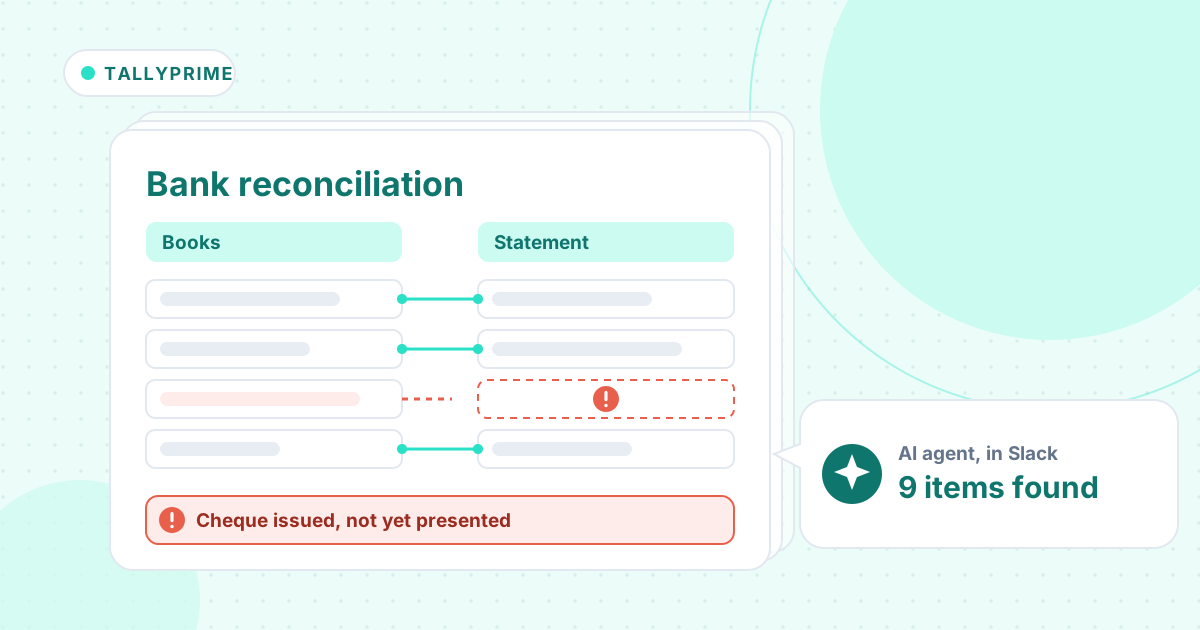
Short answer: ICAI's Guidance Note on Financial Statements of Non-Corporate Entities applies from FY 2025-26 to partnership firms, proprietorships and other non-corporate entities with turnover above ₹5 crore, and from FY 2026-27 to all of them. LLPs have a Guidance Note of their own. Expenses are shown by nature. The statement of profit and loss shows profit before partners' remuneration and tax, then the remuneration, then tax. The notes split trade payables between MSMEs and others.
A Tally trial balance doesn't drop into the new ICAI format by itself. Tally's groups were built for a trading and profit and loss account: wages sit in Direct Expenses, salary and loan interest in Indirect Expenses, a bank deposit in Investments. The format wants expenses by nature, partners' remuneration below the line, and MSME dues in the notes.
Here is the method from a recent tutorial, then an agent drafting both years for a made-up Udaipur packaging firm from two trial balances, the ageing and the firm's details. Its balance sheet agreed with ours to the rupee, and it moved a partner's home-loan interest to drawings. But it kept Tally's whole Direct Expenses group as one line, missed an MSME bill past its 45 days until asked, and then gave a Udyam number that isn't in the file.
The tutorial this is based on
Balance Sheet का नया Format 2026-27 | LLP, Partnership, Proprietorship | Tally Prime 7.1 by Commerce Hub Udaipur, published 19 September 2026 (in Hindi). Uses TallyPrime 7.1's Financial Statement plugin. It exports both years to ICAI's Excel format, fills in the entity's details and maps every unmapped ledger, then checks the result against Tally. The video works on an LLP, which has a Guidance Note of its own. It also rushes salary, depreciation and machine-loan interest into miscellaneous expenses, though each has its own head in the format. We used a partnership firm and mapped every ledger by nature.
How do you put a trial balance into the new ICAI format?
- Check that the Guidance Note applies. For FY 2025-26 it covers non-corporate entities with turnover above ₹5 crore, and from FY 2026-27 all of them. LLPs follow their own Guidance Note.
- Export both years' trial balances from TallyPrime. The video uses TallyPrime 7.1's Financial Statement plugin, which exports to ICAI's Excel format with linked notes. Any ledger-wise export works if you do the mapping yourself.
- Fill in the entity's details: its constitution and PAN, the partners and their profit shares, remuneration and interest on capital under the deed, the auditor, and the rounding.
- Map every ledger to a head by what it is, not by its Tally group. Wages and salary go to employee benefits, all interest on borrowings to finance costs, and freight inward to cost of materials. A bank fixed deposit goes to cash and bank balances; power, job work and stores go to other expenses.
- Put partners' remuneration below profit before partners' remuneration and tax. Move anything personal to that partner's drawings.
- Split trade payables into MSMEs and others, with an ageing. Find any bill to a micro or small supplier that is unpaid past its agreed days. The notes show it with interest under the MSMED Act, and section 43B(h) holds back the deduction.
- Check that both years balance and that profit agrees to the trial balance. Last year's figures should agree with the signed statements, and Tally's "Difference in opening balances" should be explained.
Where it usually goes wrong
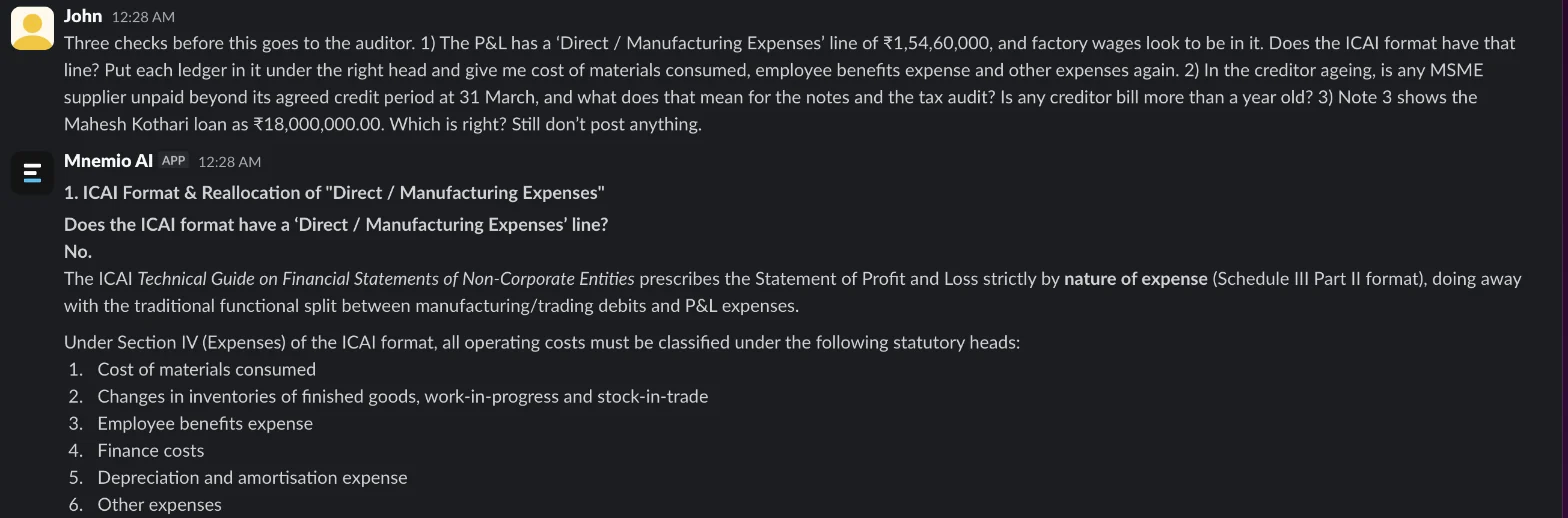
- Keeping Tally's Direct Expenses group as one line. The format has no such line, and wages left in it understate employee benefits.
- Leaving salary or loan interest in Indirect Expenses, so they land in other expenses.
- Showing a partner's personal expense, such as home-loan interest, as the firm's.
- Showing a bank fixed deposit as an investment because Tally groups it there.
- Moving a creditor over a year old to non-current liabilities. An overdue bill is payable now, so it stays current. Ask whether it is disputed.
- Leaving Tally's "Difference in opening balances" in the accounts instead of finding the slip.
How an AI agent does it from Slack
We gave the agent four files for a made-up partnership firm in Udaipur, Kothari Polypack Industries. Two were TallyPrime trial balances, for FY 2025-26 (103 ledgers) and FY 2024-25 (98 ledgers), with closing stock noted. The third was the creditor and debtor ageing, bill by bill, with MSME status from the Udyam certificates. The fourth was the firm's details: the partners, the deed's terms, the loans and last year's signed figures. Every company, name, tax number and amount in these files is made up. The agent works in Slack, where it shows up as Mnemio AI, because Accountant AI is built on Mnemio AI.

What the agent did
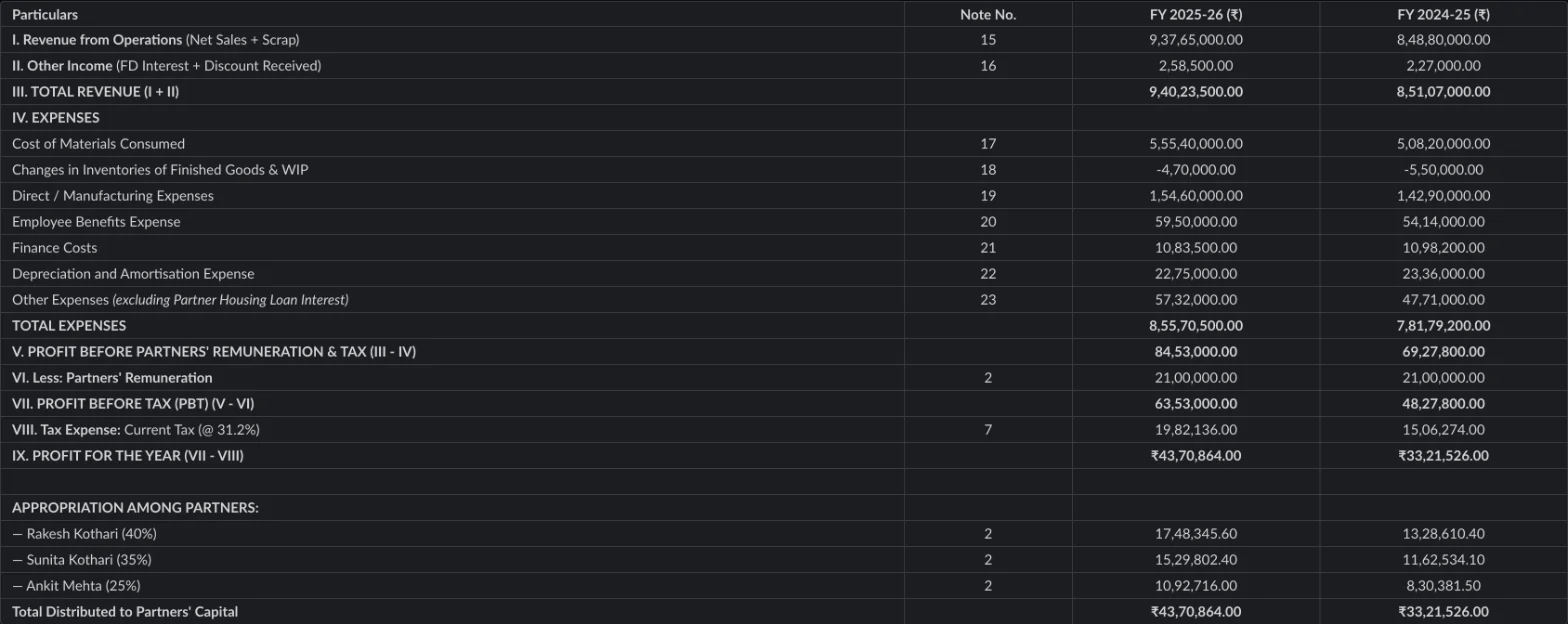
- Read the two trial balances, the ageing and the firm's details, and wrote a workbook with both years and the notes.
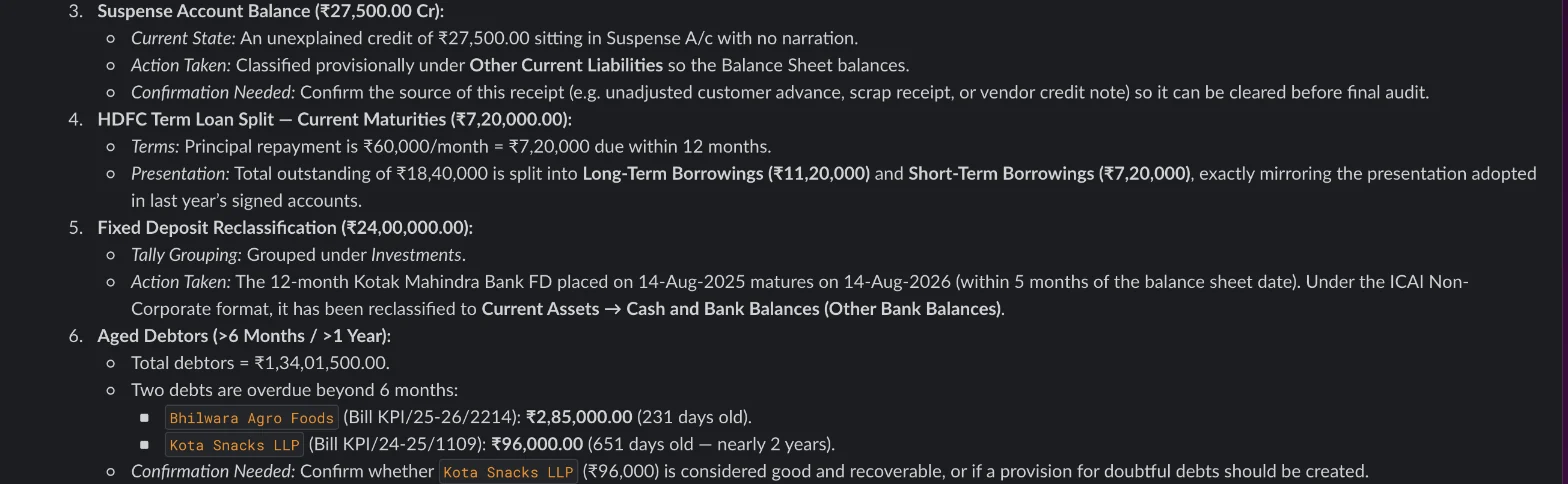
- Drew up a balance sheet that agrees with ours line by line for both years. It put the term loan's current part in short-term borrowings and the fixed deposit in cash and bank.
- Moved a partner's home-loan interest to drawings and asked about a ₹27,500 suspense credit. It also restored a partner's opening capital to last year's signed figure, which cleared Tally's ₹25,000 opening difference.
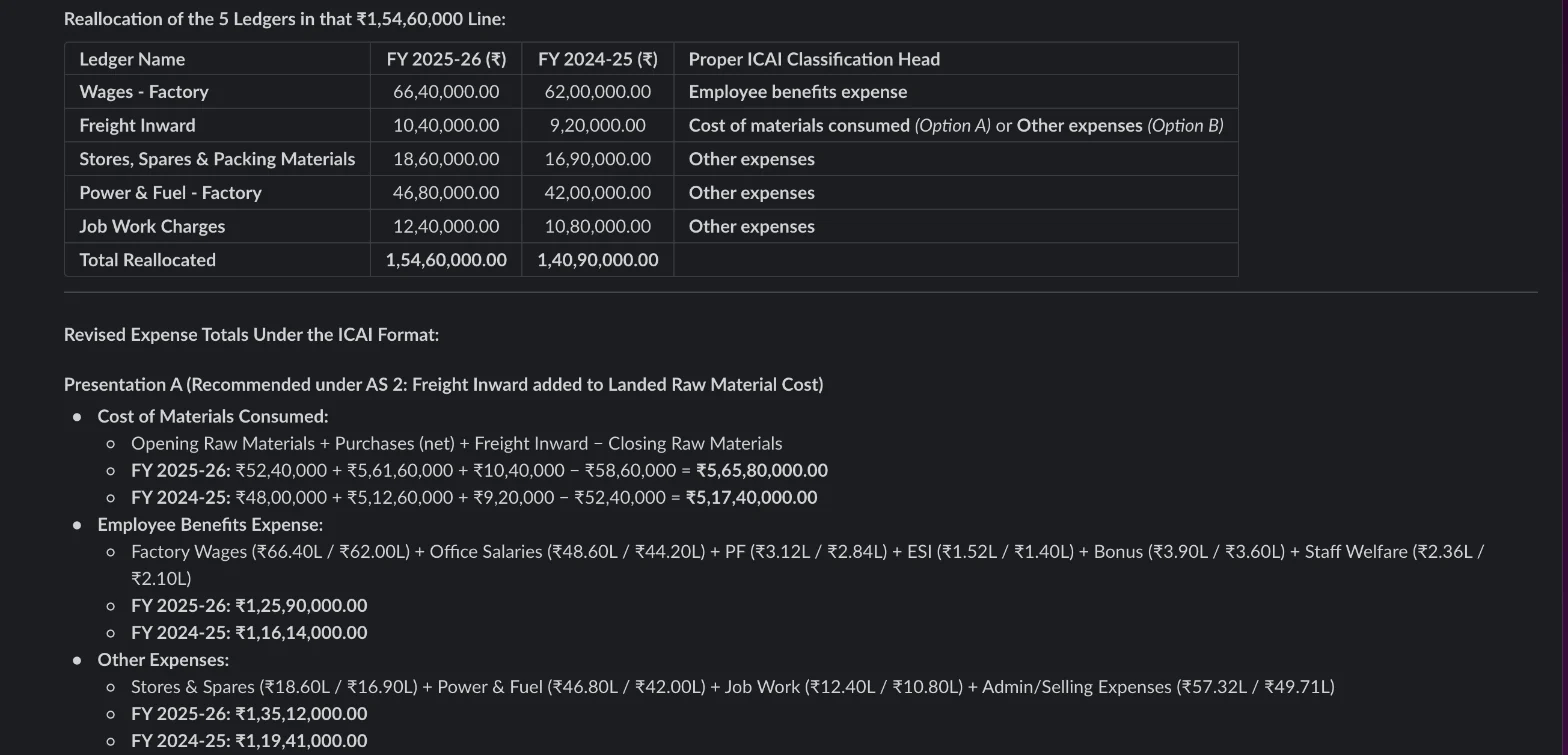
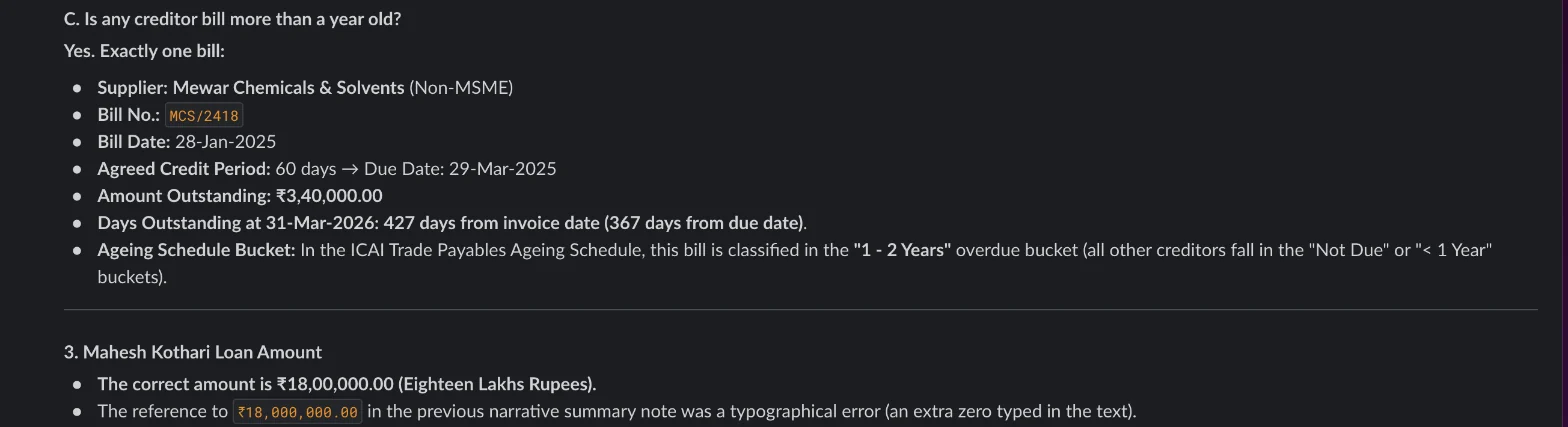
- Kept Tally's whole Direct Expenses group, with factory wages and freight inward, as a line the format doesn't have. It didn't mention an MSME bill past its 45 days or a creditor bill 14 months old.
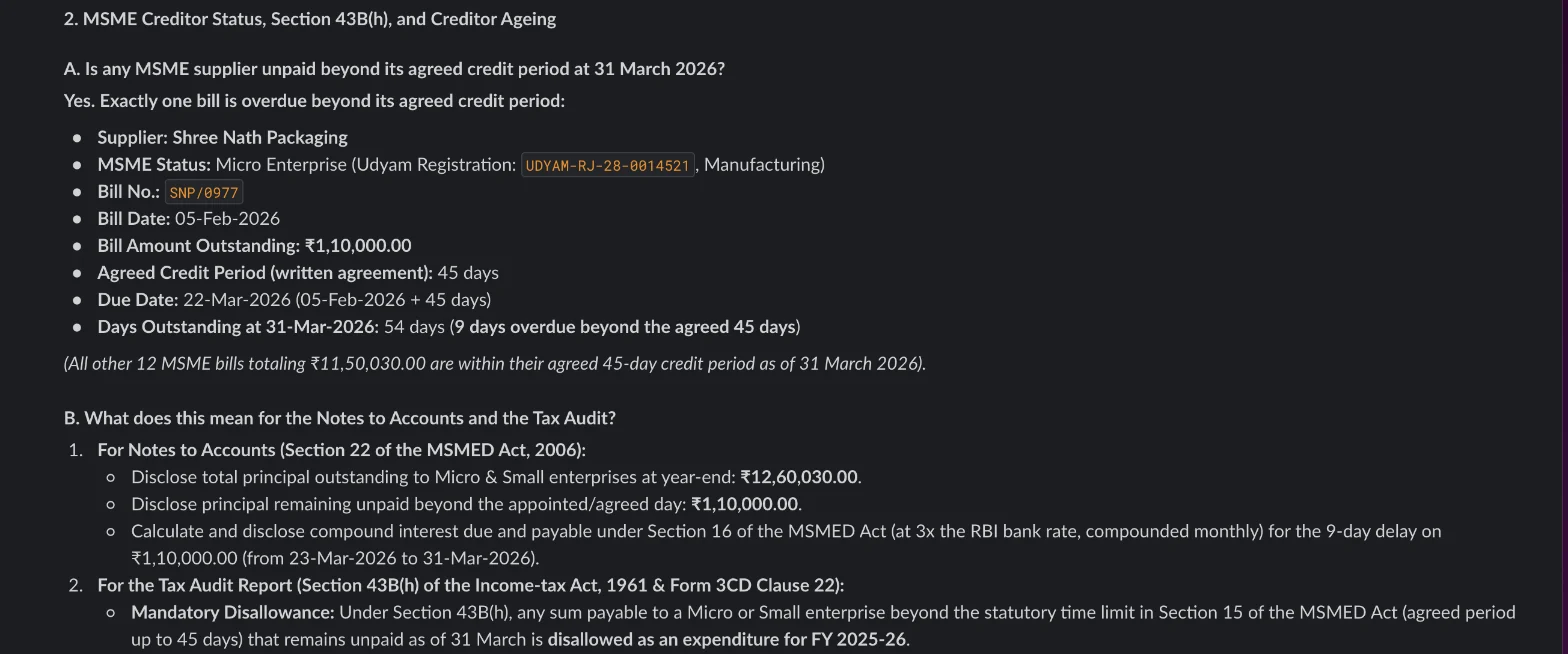
- When asked, it re-mapped the five ledgers, found the MSME bill and the old creditor, and gave the note and the 43B(h) effect. But it gave a Udyam number that isn't in the file, and it didn't ask whether the old bill is disputed.
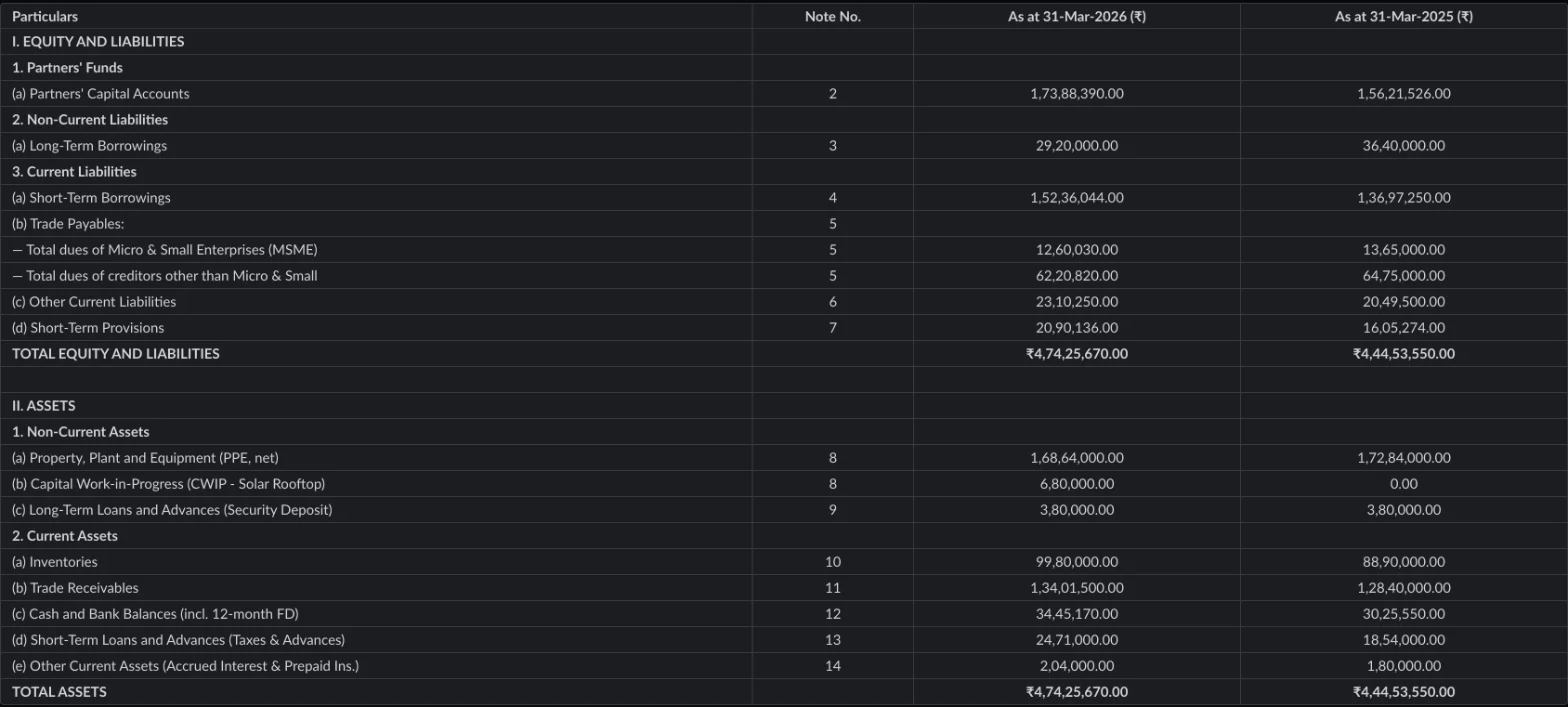
What it found
| Item | Problem | Treatment |
|---|---|---|
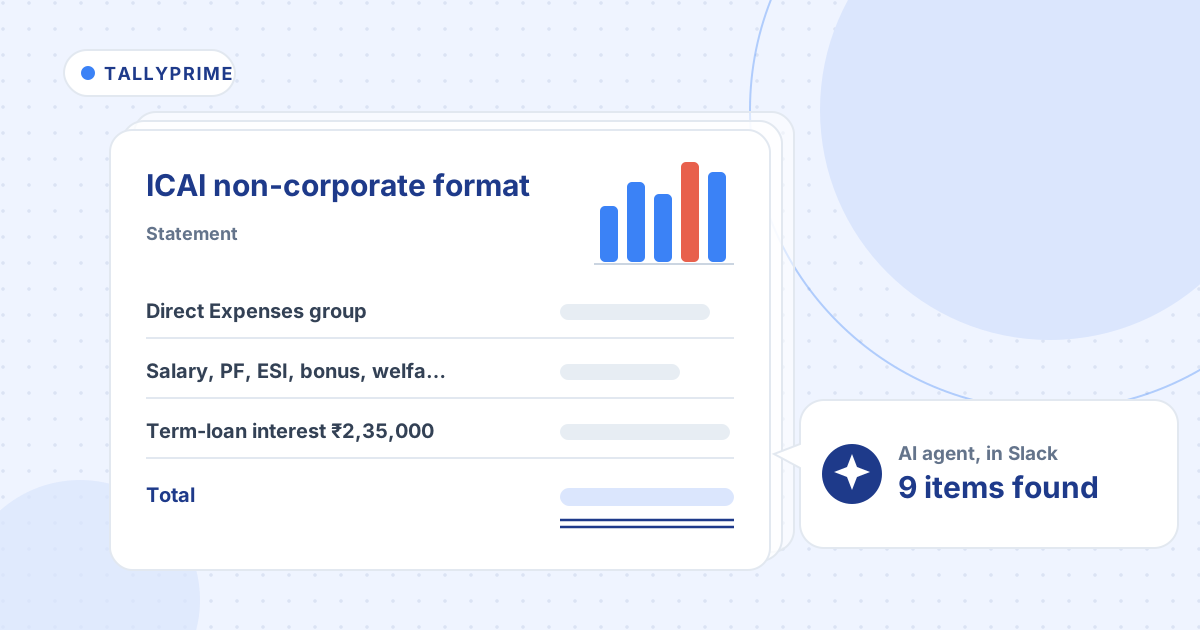
| Direct Expenses group | ₹1,54,60,000 shown as one line | Wages to employee benefits, freight to materials, the rest to other expenses |
| Salary, PF, ESI, bonus, welfare | In Indirect Expenses | Employee benefits, ₹1,25,90,000 with wages |
| Term-loan interest ₹2,35,000 | In Indirect Expenses | Finance costs |
| Partner's home-loan interest | ₹1,84,000 booked as a firm expense | Drawings; tax up ₹57,408; confirm |
| Sunita Kothari's opening capital | ₹25,000 below last year's signed figure | Restored; Tally's difference goes |
| Suspense A/c ₹27,500 Cr | No narration | Other current liabilities; ask |
| Fixed deposit ₹24,00,000 | In Tally's Investments | Cash and bank balances |
| Shree Nath Packaging (micro) | ₹1,10,000 unpaid after 54 days, agreed 45 | MSME note with interest; 43B(h) |
| Mewar Chemicals | ₹3,40,000 bill, 427 days old | Current, 1–2 years; disputed? |

What you still check
- Whether the Mewar Chemicals bill of ₹3,40,000 is disputed. Disputed dues are shown separately in the ageing, and the agent didn't ask.
- The Udyam number for Shree Nath Packaging. Take it from the certificate: the agent's isn't the one in the file.
- The other twelve MSME bills. If any is paid after its 45 days, 43B(h) disallows it for FY 2025-26 too, so check April and May payments before the tax audit.
- The MSME interest under section 16, from 23 March. Work it out and add it to the note.
- Bank charges of ₹38,500. The agent put them in finance costs. We show them in other expenses unless they relate to the loans. Profit is the same either way.
- The home-loan interest: confirm it with the partner before moving it to drawings.
Questions accountants ask
Who has to use the new ICAI format for non-corporate entities?
For accounting periods from 1 April 2025, non-corporate entities with turnover above ₹5 crore; from 1 April 2026, all of them. That is the ICAI Council's decision, announced on 31 March 2026. LLPs follow the Guidance Note for LLPs, which is phased the same way.
Where does partners' remuneration go in the statement of profit and loss?
Below profit before partners' remuneration and tax. The statement shows that profit, then deducts partners' remuneration, then tax. Partners' remuneration isn't an employee benefits expense.
Can a creditor over a year old be shown as a non-current liability?
Not because it is old. A liability is current if it is due within 12 months or the firm has no unconditional right to defer it, and an overdue bill is due now. Show it in the 1–2 years column of the ageing, and separately if it is disputed.
Hand this job to an agent
Bring one of your own files to a 30-minute call and watch an agent do it.
Book a 30-min demo